

Supporting Research through Secondments
21 يونيو، 2026 2026-06-21 13:49Supporting Research through Secondments

Developing meaningful research in today’s academic environment is rarely an individual endeavour. Increasingly, high-quality scholarship is collaborative, bringing together expertise, perspectives, and resources across institutions and disciplines. Interdisciplinary research, in particular, has become essential in addressing complex global challenges, requiring academics to move beyond traditional boundaries and engage with others in new ways.
Yet building these connections remains challenging. Research collaboration depends not only on individual initiative, but on access – to networks, to institutions, and to the time required to develop ideas. For many academics, these conditions are difficult to realise. Opportunities to engage meaningfully with peers beyond one’s institution can be limited, while teaching responsibilities often restrict the time available for sustained research activity. In some contexts, collaboration with colleagues at other universities may still be shaped by cultures that position peers as competitors rather than partners.
Many of these challenges reflect a growing gap between what contemporary research increasingly demands and the conditions in which it takes place. Recognising this, EUB’s leadership has taken a deliberate and strategic step to support research development by creating opportunities for engagement beyond the institution. Central to this approach is the introduction of research secondments. By enabling faculty to spend time within another institution or organisation, secondments create the necessary space for sustained collaboration, dedicated research focus, and the development of new ideas. They allow researchers to work closely with colleagues, access new expertise and resources, and engage in environments that support focused academic activity. They also open pathways for meaningful engagement with industry, strengthening the relationship between research and practice. In doing so, secondments move beyond recognising research activity to actively enabling it.
EUB’s Secondment Policy
At EUB, this approach has been formalised through the introduction of a Secondment Policy. Developed as part of the University’s broader commitment to researcher development, the policy provides eligible faculty with the opportunity to undertake short-term placements with external institutions, including universities and industry partners. These placements, typically ranging from one week to one month, are deliberately structured to provide dedicated time outside of core teaching periods to develop research, disseminate ideas, and expand networks.
Since its introduction, secondments at EUB have begun to demonstrate their value in practice. Collectively, these engagements reflect a strong commitment to international collaboration, with activities to date spanning the UK, China, and Italy. So far, three successful secondments have been completed: one focused on research development with an overseas university, another on research development with a global industry collaborator, and a third centred on research dissemination at an international university.
Our Success Stories
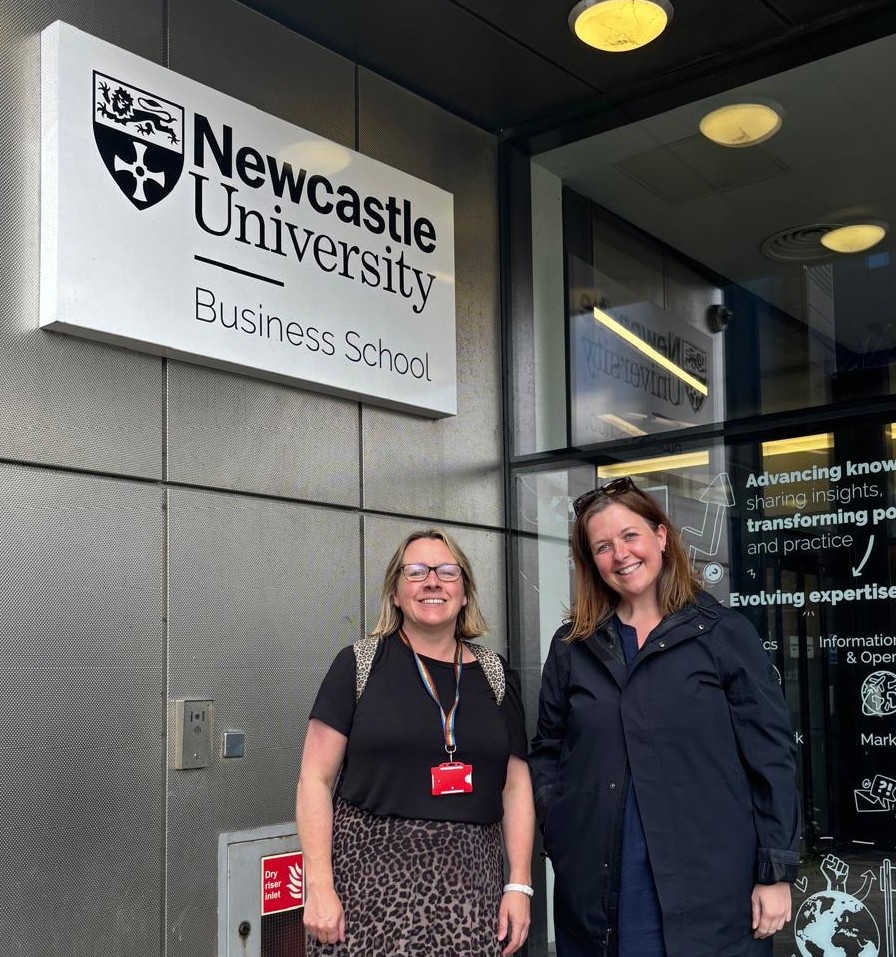
Dr Francesca Speed undertook a research secondment at Newcastle University, a research-intensive Russell Group university in the UK. Hosted as a “visiting researcher,” the agreement provided access to a working space, colleagues, campus events, and the mentorship of the secondment host. This secondment provided dedicated time to explore new ideas and develop research outputs. It resulted in the publication of one peer-reviewed article in the Journal of Gender in Management.
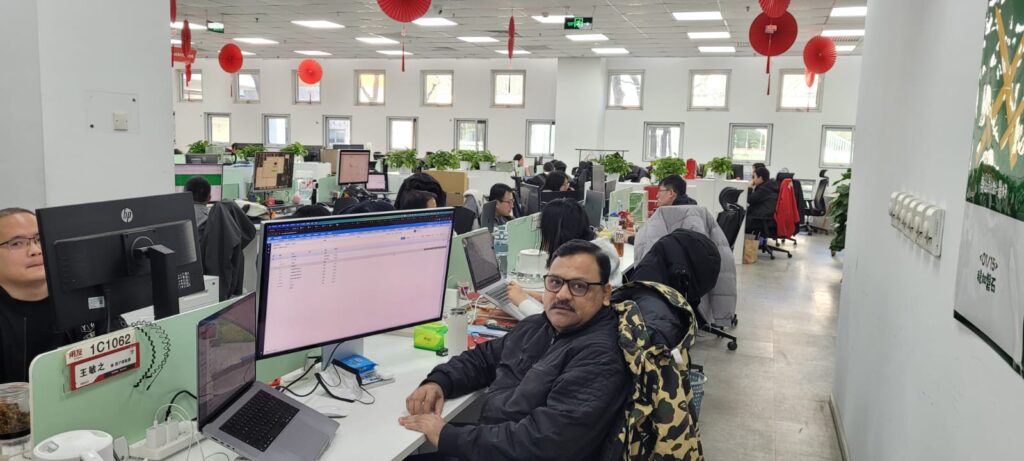
Dr Satheesh Abimannan completed an industry research secondment at Yonyou Network Technology in Beijing, China, a leading global provider of enterprise software and digital transformation solutions. He noted that the secondment provided valuable exposure to enterprise-scale AI practices while strengthening opportunities for future academic–industry collaboration. The impact of this engagement extended beyond individual research outcomes, contributing to student opportunity, with an EUB student subsequently invited to interview for a competitive internship and going on to secure a position at one of Yonyou’s branches in the Gulf.
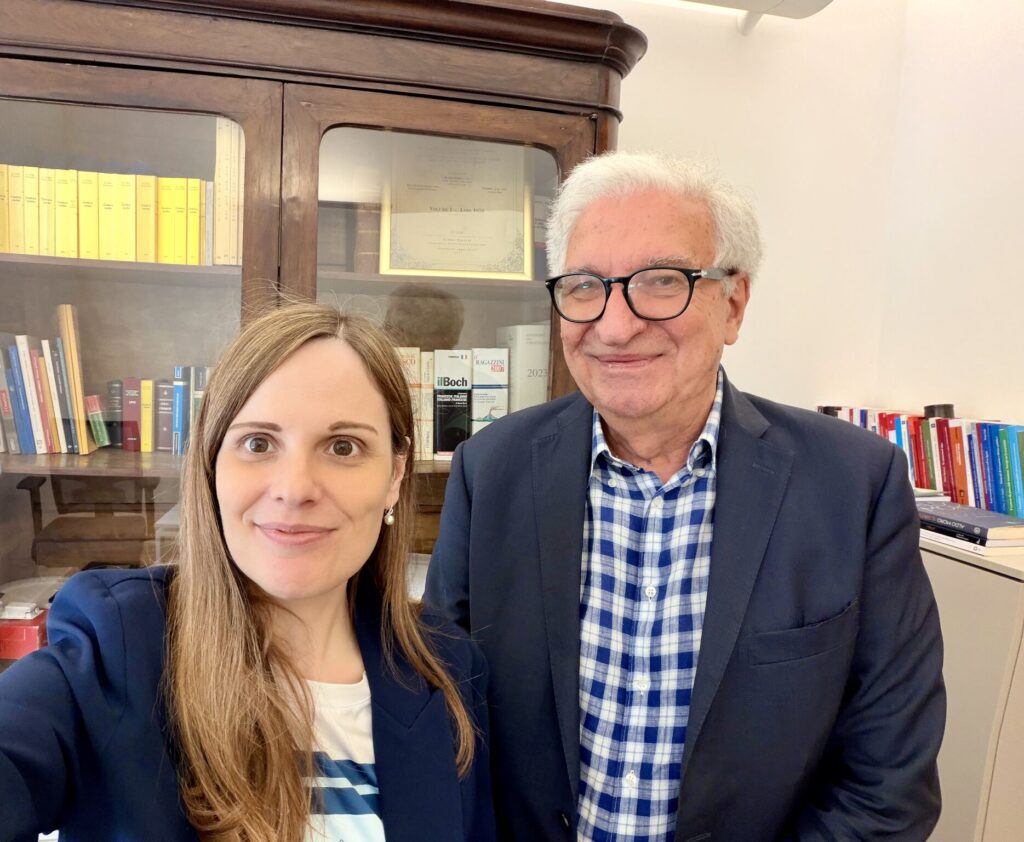
Dr Maria Casoria undertook a secondment at LUISS Business School in Rome, Italy, as a Contracted Professor of Antitrust Law. During her time there, she delivered lectures to international MBA students, engaging with contemporary challenges in competition law, including digital monopolies. The secondment also provided an opportunity to reconnect with leading scholars in the field and to explore future avenues for academic collaboration. Reflecting on the experience, she highlighted the importance of international academic engagement in advancing teaching, research, and knowledge exchange. This secondment further strengthened EUB’s international academic connections while supporting both individual research dissemination and wider collaborative opportunities.
These examples illustrate how secondments create tangible outcomes, not only in advancing research but also in strengthening networks, supporting collaboration, and extending opportunities to disseminate research across wider academic communities. Our policy also adopts a reciprocal approach by supporting inward secondments. External academics can join EUB as visiting researchers. In doing so, secondments are not only outward-facing, but also contribute to the development of a more connected and collaborative research environment within EUB itself.
Building a Collaborative Research Culture
As EUB continues to develop its research environment, secondments form an important part of a wider ecosystem of support provided through the Scientific Research and Innovation Centre. Research culture is not built solely through outputs, but through the opportunities, structures, and connections that enable meaningful engagement. Alongside initiatives that recognise research excellence and engagement, secondments provide a practical mechanism through which faculty can develop their research networks, skills, knowledge, and impact. By supporting faculty to connect with external institutions, develop collaborations, and dedicate time to their research, secondments contribute to a research environment that is outward-facing and collaborative, supporting faculty to advance their research. In doing so, they help to shape a research culture that is not only productive, but purposeful and impactful. We hope this encourages other institutions to consider similar approaches, opening up greater opportunities for collaboration and contributing to a shared goal of advancing meaningful knowledge, impact, and researcher development.